
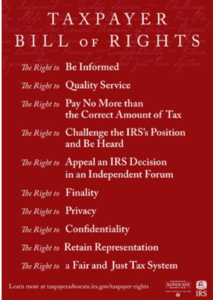
Know Your Protections: A Guide to the IRS Taxpayer Bill of Rights
Dealing with tax matters can feel overwhelming, but you do not have to navigate the Internal Revenue Service (IRS) without protection. The IRS officially outlines ten fundamental rights guaranteed to every taxpayer under the Taxpayer Bill of Rights.
Whether filing an annual return, responding to an audit notice, or resolving past-due taxes, understanding these ten rights ensures you receive fair treatment throughout the process.
The 10 Fundamental Taxpayer Rights
1. The Right to Be Informed
Taxpayers have the right to clear, understandable explanations of tax laws, IRS procedures, forms, instructions, and notices. When the IRS makes a decision regarding your tax account, you are entitled to receive a clear explanation of the outcome.
2. The Right to Quality Service
You are entitled to prompt, courteous, and professional assistance from IRS personnel. Communications should be easy to understand, and if you experience inadequate service, you have the right to speak directly with a supervisor.
3. The Right to Pay No More than the Correct Amount of Tax
You are only legally required to pay the exact amount of tax due (including applicable interest and penalties). The IRS is obligated to apply all payments correctly to your account.
4. The Right to Challenge the IRS’s Position and Be Heard
If you disagree with a formal IRS action or proposed adjustment, you have the right to raise timely objections and submit supporting documentation. The IRS must consider your evidence fairly and provide a formal response if they disagree.
5. The Right to Appeal an IRS Decision in Independent Forum
Taxpayers are entitled to a fair, impartial administrative appeal for most IRS decisions—including penalty assessments—through the Independent Office of Appeals. You also maintain the right to take tax disputes to court.
6. The Right to Finality
You have the right to know the maximum time limits involved in tax matters, including:
-
The deadline to challenge an IRS position.
-
The time limit for the IRS to audit a tax return (typically 3 years for standard audits).
-
The statutory timeframe for the IRS to collect a tax debt.
-
Clear notice when an audit has been officially concluded.
7. The Right to Privacy
IRS inquiries, audits, and enforcement actions must strictly comply with the law and remain no more intrusive than necessary. Investigations must respect due process rights, including search and seizure protections.
8. The Right to Confidentiality
Your tax information is private. The IRS cannot disclose your details to unauthorized third parties unless explicitly permitted by law or authorized by you. Misuse or wrongful disclosure of tax information by employees or preparers carries legal penalties.
9. The Right to Retain Representation
You may hire an authorized representative—such as an attorney, CPA, or Enrolled Agent—to handle interactions with the IRS on your behalf. Taxpayers who cannot afford legal representation may qualify for assistance from a Low Income Taxpayer Clinic (LITC).
10. The Right to a Fair and Just Tax System
The tax system must consider unique facts or financial circumstances that affect your ability to pay or provide documentation on time. If standard IRS channels fail to resolve an issue or if you face severe financial hardship, you can seek direct help from the Taxpayer Advocate Service (TAS).
Key Support Resources Available to You
-
Taxpayer Advocate Service (TAS): An independent organization within the IRS that helps taxpayers resolve persistent issues and ensures fair treatment.
-
Low Income Taxpayer Clinics (LITCs): Independent clinics that represent low-income individuals in disputes with the IRS for free or for a nominal fee.
-
IRS Publication 1: Your Rights as a Taxpayer—the official document summarizing these protections in multiple languages.